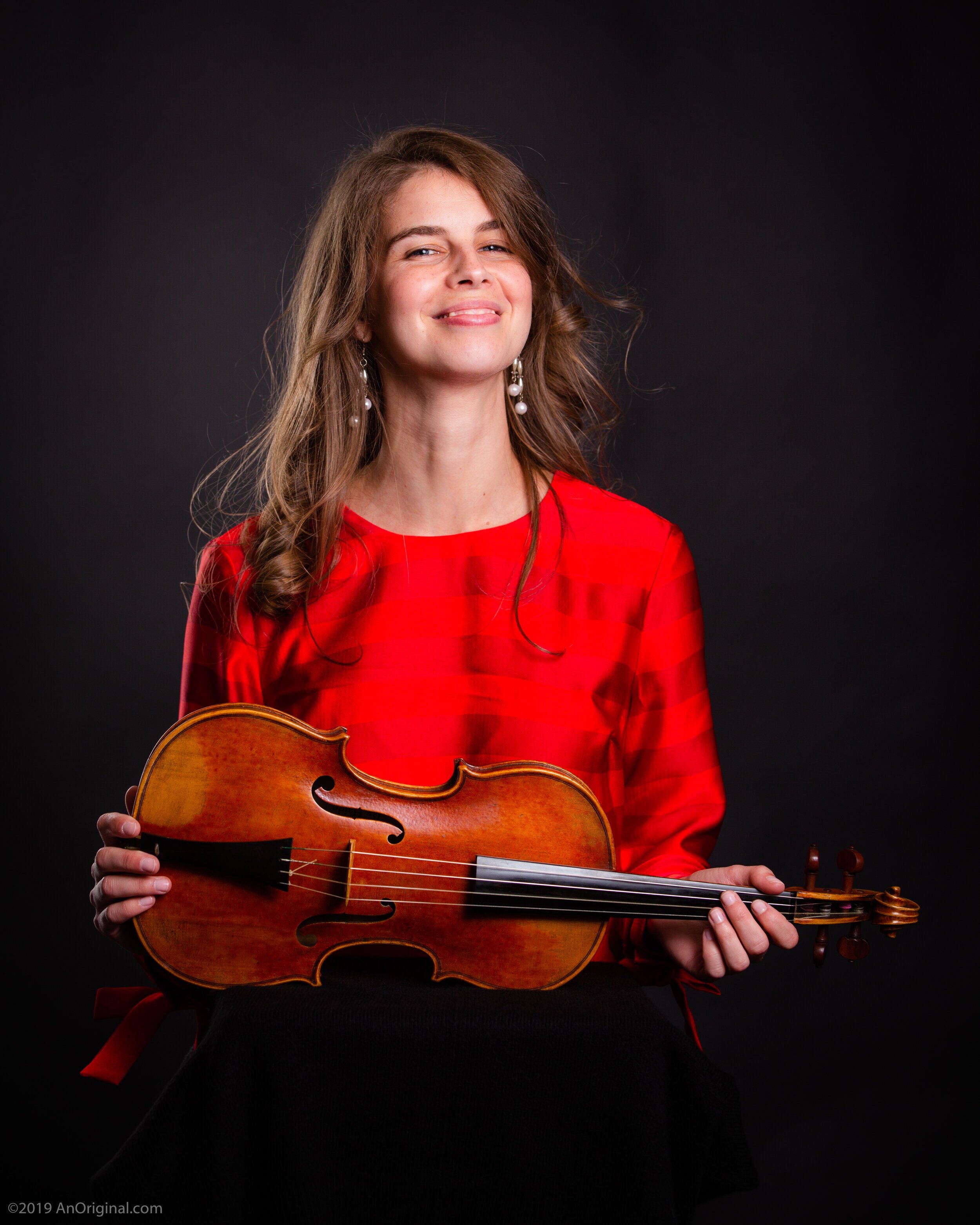
The highlight of my Monday? Drawing and colouring in rhythm flashcards for my students (“fly a-way bum-ble bee” for triplets and “fu-zzy yellow ca-ter-pil-lar” for semi-quavers/sixteenth notes) at the British Library, while waiting for a score of Vivaldi’s concerto “Il Rosignuolo” (the cuckoo) to be photocopied for an upcoming exam. Chocolate mousse sundae was a close second.
Posted in Uncategorized | Tagged research, teaching | Leave a Comment »
Today I started off a group of five new Suzuki violin students, ages 2-4. It was refreshing to pack stickers into my work bag once again and be greeted in the foyer this morning by a T-Rex!
Posted in Uncategorized | Tagged suzuki, teaching | Leave a Comment »
Preparations for my upcoming 24 May recital, “French or Faux?” are in full swing. Here’s a snapshot of the creative process of putting on a short lunchtime concert, in the form of “To Do” and “Done” lists.
Done List
- Programme, order set: Music of (or in imitation of) the French baroque style. Mix of solo and ensemble, instrumental and vocal works by Marin Marais, Georg Telemann, Jean-Baptiste Lully, Archangelo Corelli, François Couperin.
- Catchy title chosen: “French or Faux?”
- Date and time set: 1:05 PM, Friday, 24 May, 2013
- Venue arranged: RCM Museum, Prince Consort Road, London
- 8 musicians on board: Randall Scotting (countertenor), Hailey Willington (violin), Sophie Clayton and Mafalda Ramos (flute), Colin Clark (viola da gamba), George Ross (cello), Wezi Elliott (theorbo), Aidan Phillips (harpsichord)
- Equipment chosen: Short French and Italian sonata bows and continuo instruments (viola da gamba, cello, theorbo and harpsichords) selected based on repertoire dates, national styles, composer directives and instrument availability!
- Scores printed: Serious time spent bonding with the RCM library and http://www.imslp.org
- Poster designed: Look out!
- Staging diagrams sketched: Who’s on first? What’s on second?
To Do List
- Prepare, distribute scores: Determine bowings a la Georg Muffat [author of elucidating 17th century treatise on French musical style] and a tasteful overlay of French ornaments!
- Schedule and plan rehearsals with the band
- Publicize concert: Press releases, websites, Facebook, mailing lists, a poster-posting blitz, etc. etc!
- Research, write programme notes: Communicate why I’ve chosen to fill your 50 minutes with this particular music
- Practice: What?! I have to play on this wooden box strung with four bits of gut as well?
Posted in Uncategorized | Tagged concert planning | Leave a Comment »
I lied. Let’s skip the roots and nomadism I promised in my last post for now, and move up to the xylem and phloem of the creative tree (drumroll please)… organizational systems!
I LOVE organization.
Binders, coloured dividers and paper clips fill my heart with joy. Excel spreadsheets comfort me. I get a rush from being in the diary section at Paperchase. Owning a four-hole-punch made me feel at home in the UK.
There are also loads of useful web-based tools that help facilitate the creative process. Here are a few of my favourites…
Partifi.org: Genius and generous harpsichordist Kelly Savage and hubby developed this fantastic timesaving, frustration-curbing tool that’s particularly useful for those into Historical Performance. Partifi enables one to scan full scores (or simply enter the IMSLP cataloguing number) and turn them into individual parts for performance. It’s super easy to use and eliminates hours of photocopying, cutting, pasting and occasionally playing lines out of order in rehearsal!
Doodle.com: Whether you’re trying to devise a master lesson schedule for 40 private students or find a time when your ensemble can meet up for rehearsal next week, Doodle is super helpful. In one fell swoop offer your clients or colleagues a series of free times, then collect and view their responses in one screen. A true organizational boon!
Posted in Uncategorized | Tagged organisation | Leave a Comment »
People are like trees.
A healthy tree’s roots reach into the ground to create a stable base, drawing up nutrients and water from the soil. Internal structures (xylem and phloem) carry the nutrients and energy from the roots up through the branches to the leaves so the tree can produce fruit.
In order to be a healthy, produce-growing creativity tree, you need to be feeding and working from a stable base. People have bodies, and taking care of them is an integral part of the creative process. In the past few years I’ve experienced and become more aware of the dynamic difference that having a stable location, enough good food, rest, exercise, as well as supportive relationships and habits, make in the ability to be creative. Income is necessary for expenditure, whether financial or creative. Feed your tree!

Next on Before Backstage… Life as a Nomad
Posted in Uncategorized | Tagged creative tree | Leave a Comment »
My sister’s friend recently visited a hospital with her young son. The tyke insisted on wearing his play doctor’s coat and bringing a toy medical kit for the call. After all, who does one find in hospitals? Doctors. One ought to be appropriately dressed for the occasion.
Yesterday afternoon I visited the Handel House Museum in London, where the composer lived for a musically productive 36 years. In the morning I packed my bag for the day’s practice session and museum visit. I loaded in scores for my next project, a museum guide and a London A-Z. Then I slipped in my lovely red copy of Handel’s complete works for Violin and Basso Continuo. One ought to be appropriately musically dressed for the occasion.
Posted in Uncategorized | Tagged Handel House, London | Leave a Comment »
Tonight I invited my band over for supper.
An important part of the creative process is being well-fuelled: eating well. It’s amazing the difference filling your body’s tank with the proper kind of “petrol/gas” makes for clear, efficient and inventive thinking. And if I write about food there’s a chance my sister may read this blog.
I chose a very American menu for my dinner party, a savoury Butternut Squash Bread Pudding with turkey and sautéed greens. I was mostly inspired by the bread I picked up last night at 10pm, reduced to a phenomenal 25p.
The bread pudding recipe comes from a fantastic cookbook I was introduced to while living with a bunch of Mennonites in central Pennsylvania: Simply in Season. It’s filled with loads of simple recipes that make use of foods you might find in your local farmer’s market, all conveniently organized by season. Make sure you check out the killer Black Bean and Sweet Potato Burritos. Bon apetit!
Savoury Butternut Squash Bread Pudding
Based on a recipe from Simply in Season. Found on www.frontdoororganics.com.
| 3 cups butternut squash (peeled and cut into ½” pieces) | 1 cup onion, diced |
| 1 clove garlic, minced | 3 large eggs |
| 1 Tbsp chopped parsley | ½ tsp each chopped rosemary, dried sage |
| 2 large egg whites | 2 cups milk |
| 1 cup parmesan, grated | 9 cups of day-old bread, torn |
| Salt and Pepper | A splash or two of olive oil |
Coat squash in oil, season with salt and bake in a hot oven (400°F) for about 12 minutes, or until tender. Remove from oven and reduce heat to 350°F.
In a skillet, heat one teaspoon of olive oil over medium-high heat and cook the onions with the sage and rosemary until tender, about 7 minutes. Add the garlic and sauté for a minute.
In a large bowl, whisk together the eggs, egg whites and milk. Add half a cup of grated parmesan, the chopped parsley and season salt and pepper. Stir in the cooked and cooled squash, onion and garlic. Add the bread and gently stir to combine. Let it stand for about 10 minutes.
Spoon into a greased 2-quart baking dish and sprinkle on the remaining parmesan cheese. Bake until set and top is slightly browned, 45 minutes.
Posted in Uncategorized | Tagged food | Leave a Comment »